The Sahitya Akademi (India’s National Academy of Letters) had its Annual Festival of Letters in February 2017, during which the Creation Myth of six tribal groups were narrated and presented in the original languages (Kurukh/ Oraon, Munda, Santali, Kharia, Ho and Biryia/ Asur).
Here are two videos that were shown with live-streaming and are available on Youtube.
The session is in two parts:
Part I has narrators from Munda, Kurukh/ Oraon, Ho and Birjiya/ Asur;
Part II has narrators from Kharia and Santali.
Source: courtesy Dr. Ivy Imogene Hansdak (Assistant Professor, Department of English, Jamia Millia Islamia University New Delhi)
Find scholarly books, poetry and fiction relating to tribal culture – Indian publishers
List of sites covered by this Google SafeSearch engine
https://www.alephbookcompany.com
More SafeSearch on this website
Search tips
Combine the name of any particular state, language or region with that of any tribal (Adivasi) community.
Add keywords of special interest (music, poetry, dance just as health, sacred grove and biodiversity); learn about the rights of Scheduled Tribes such as the “Forest Rights Act” (FRA); and the United Nations “Declaration on the Rights of Indigenous Peoples”, “Universal Declaration of Human Rights”, “women’s rights”, or “children’s right to education”.
Ask a question that includes “tribal” or “Adivasi”, for instance: “Adivasi way of life better?” (or “tribal way of life worse?”)
Specify any particular issue or news item (biodiversity, bonded labour and human trafficking, climate change, ecology, economic development, ethnobotany, ethnomedicine, global warming, hunter-gatherers in a particular region or state, prevention of rural poverty, water access).
For official figures include “scheduled tribe ST” along with a union state or region: e.g. “Chhattisgarh ST community”, “Himalayan tribe”, “Scheduled tribe Tamil Nadu census”, “ST Kerala census”, “Particularly Vulnerable Tribal Group Jharkhand”, “PVTG Rajasthan”, “Adivasi ST Kerala”, “Adibasi ST West Bengal” etc.
SafeSearch browser tips
If your (mobile) browser fails to display “embedded” media contents, Google maps and SafeSearch windows
Try another browser like Firefox, Chrome or Safari available on your device
Ensure your favourite browser is up to date
Close your present browser
Check your browser and mobile (gsm) settings:
e.g. permission for video or JavaScript
(seen under Preferences >Security >Enable JavaSript)
Restart your computer (smartphone, tablet)
Reconnect to your wifi network or connect to a different one
On some iPhone models the following helps:
>Settings >Safari >scroll down to:
SETTING FOR WEBSITES
Enable “Request Desktop Website” (All Websites) temporarily
Return to the map-post in Safari and “Reload”
Return to >Settings and disable “Request Desktop Website” again
Return to the post in Safari and “Reload”which should now display “embedded” contents as intended (with the convenience of browsing the mobile version on a small screen)
Note: similar solutions may also work with other mobile operating systems.
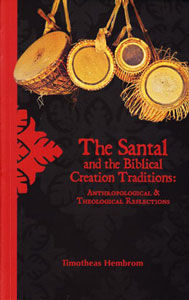
The Santals are one of the largest homogenous indigenous peoples group in India […] They have no temples, nor images to worship and no fixed place to worship in; no holy mountains and no sacred rivers for pilgrimages and yet they hold an unassailable religious faith which can be traced through the tradition of the creation narrative, through their festivals, their cleansing ceremonies performed during their birth, wedding, and death, and through their belief in the continuation of life after death | Santal customs >>
Search Worldcat.org for publications by reputed authors (select “Open Content/Open Access” for freely downloadable content)
Search tips
Combine the name of any particular state, language or region with that of any tribal (Adivasi) community.
Ask a question that includes “tribal” or “Adivasi”, for instance: “Adivasi way of life better?” (or “tribal way of life worse?”)
Add keywords of special interest (music, poetry, dance just as health, sacred grove and biodiversity); learn about the rights of Scheduled Tribes such as the “Forest Rights Act” (FRA); and the United Nations “Declaration on the Rights of Indigenous Peoples”, “Universal Declaration of Human Rights”, “women’s rights”, or “children’s right to education”.
Specify any particular issue or news item (biodiversity, bonded labour and human trafficking, climate change, ecology, economic development, ethnobotany, ethnomedicine, global warming, hunter-gatherers in a particular region or state, prevention of rural poverty, water access).
“In less than 200 years, photography has gone from an expensive, complex process to an ordinary part of everyday life. From selfies to satellites, most of the technology we use and spaces we inhabit rely on cameras. […] While photographic documentation can aid in shaping history, it can also be a window into the horrors of the past.” – Read more or listen to Butterfly Effect 9 – The Camera on CBC Radio Spark 26 May 2023 >>