Networking, respect for the culture nurtured by local communities and knowing the aspirations of modern tribal youth – these factors help rural children realize their full potential.
In recent time, modernity has triggered tribal consciousness empathetically. Increasingly available facilities are pushing the educated and informed tribal groups to seek (new) identity among majority in the Indian society. […]
So it is very important for anthropologists and other social scientists in contemporary world to study understand and explain the status of tribal youth with respect to its participation and acceptance to the wave of development and modernization and further related changes. As this unstoppable force of development and further change, already experienced by the nontribal societies and modern world, has and is being realized with many positive as well as devastating effects in personal as well as social fronts of individuals it is important to understand that how the tribal youth is dealing or tends to deal with it. […]
Considering the changing scenario in the present context, two formal emerging sides come out from preliminary understanding. The elderly generation along with its acceptance to the changes, defines it as the need of the altered scenario. But at the same time, it explains the aspiration of modern tribal youth as distancing from the age old community values and morale. On the other hand, the sublime youth is silently and gracefully adopting such new avenues. Fading importance of various social structures and institutions are few of the different dimensions of understanding among elderly sections in different tribal communities about the new aspiration of tribal youth. […]
Read or download the full paper “Social Transformation, Identity of Indian Tribes in Recent Time: An Anthropological perspective” by Subhendu Kumar Acharya & Gautam K Kshatriya (University of Delhi), published in Afro Asian Journal of Anthropology and Social Policy Volume-5, Issue-2 2014 >>
Date Visited: Sat Jul 02 2016 12:14:43 GMT+0200 (CEST)
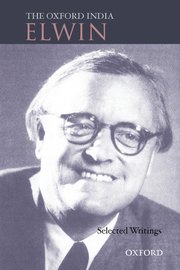
“Is it eccentric to live in beautiful scenery in the hills among some of the most charming people in the country, even though they may be ignorant and poor?” – Verrier Elwin quoted by G.N. Devy in The Oxford India Elwin >>
Learn from M S Swaminathan – a world renowned scientist – how biological diversity contributes to public health, people’s livelihood and environmental security in addition to food security: his call on fellow citizens to use and share resources in a more sustainable and equitable manner; outlining the long journey from the 1992 Earth Summit to a commitment to foster inherited knowledge through India’s Biodiversity Act and Genome Saviour Award; an award intended to reward those who are “primary conservers” – guardians of biological diversity!
More about the work of his foundation which “aims to accelerate use of modern science and technology for agricultural and rural development to improve lives and livelihoods of communities.” – www.mssrf.org | Regarding the issues of food security raised above, and the nutritional value of indigenous grains, seeds and millets, read an in-depth report that concludes that “the tribal food basket has always been diverse and nutritious” >>
Up-to-date reports by Indian experts and journalists
List of sites covered by this Google SafeSearch engine
Academia.edu (platform for academics to share research papers) – www.academia.edu
Archive.org – https://archive.org
Centre for Science and Environment – https://www.cseindia.org
Current Conservation – https://www.currentconservation.org
Development and Cooperation (D+C) https://www.dandc.eu
Down To Earth (India) – www.downtoearth.org.in
India Environment Portal – www.indiaenvironmentportal.org.in
Harnessing Nature Magazine – https://harnessingnature.online
Kalpavriksh Environmental Action Group – https://kalpavriksh.org
Mongabay-India – https://india.mongabay.com
M S Swaminathan Research Foundation – www.mssrf.org
Navdanya (protecting India’s biodiversity based food heritage) – https://navdanya.org
People’s Archive of Rural India – https://ruralindiaonline.org/
Third World Network (Penang, Malaysia) – https://twn.my
The Shola Trust (nature conservation in the Nilgiri region) – www.thesholatrust.org
TribalConnect (“uplift and benefit the community without adversely affecting or changing their vernacular”) – https://tribalconnect.org.in
WorldCat (“the world’s largest library catalog, helping you find library materials online”) – https://worldcat.org
More SafeSearch on this website
Search tips
Combine the name of any particular state, language or region with that of any tribal (Adivasi) community.
Add keywords of special interest (music, poetry, dance just as health, sacred grove and biodiversity); learn about the rights of Scheduled Tribes such as the “Forest Rights Act” (FRA); and the United Nations “Declaration on the Rights of Indigenous Peoples”, “Universal Declaration of Human Rights”, “women’s rights”, or “children’s right to education”.
Ask a question that includes “tribal” or “Adivasi”, for instance: “Adivasi way of life better?” (or “tribal way of life worse?”)
Specify any particular issue or news item (biodiversity, bonded labour and human trafficking, climate change, ecology, economic development, ethnobotany, ethnomedicine, global warming, hunter-gatherers in a particular region or state, prevention of rural poverty, water access).
For official figures include “scheduled tribe ST” along with a union state or region: e.g. “Chhattisgarh ST community”, “Himalayan tribe”, “Scheduled tribe Tamil Nadu census”, “ST Kerala census”, “Particularly Vulnerable Tribal Group Jharkhand”, “PVTG Rajasthan”, “Adivasi ST Kerala”, “Adibasi ST West Bengal” etc.
SafeSearch browser tips
If your (mobile) browser fails to display “embedded” media contents, Google maps and SafeSearch windows
Try another browser like Firefox, Chrome or Safari available on your device
Ensure your favourite browser is up to date
Close your present browser
Check your browser and mobile (gsm) settings:
e.g. permission for video or JavaScript
(seen under Preferences >Security >Enable JavaSript)
Restart your computer (smartphone, tablet)
Reconnect to your wifi network or connect to a different one
On some iPhone models the following helps:
>Settings >Safari >scroll down to:
SETTING FOR WEBSITES
Enable “Request Desktop Website” (All Websites) temporarily
Return to the map-post in Safari and “Reload”
Return to >Settings and disable “Request Desktop Website” again
Return to the post in Safari and “Reload”which should now display “embedded” contents as intended (with the convenience of browsing the mobile version on a small screen)
Note: similar solutions may also work with other mobile operating systems.
What does it mean to be Indigenous?
Indigenous Peoples can be identified according to certain characteristics:
They are politically and socially marginalized.
Most importantly, they self-identify as Indigenous Peoples.
They share an ancestral link with those who inhabited a country or region before they were colonized or before other peoples became dominant.
They have a strong link to particular territories and the surrounding natural resources.
They have distinct social, economic or political systems, which they are resolved to maintain and reproduce.
They have a distinct language, culture and beliefs.
There are more than 5,000 different Indigenous Peoples around the world comprising 476 million people – around 6.2% of the global population. They are spread across more than 90 countries in every region and speak more than 4,000 languages. | Learn more (Amnesty International) >>
Source: “INDIGENOUS PEOPLES’ RIGHTS” by Amnesty International
URL: https://www.amnesty.org/en/what-we-do/indigenous-peoples/
Date Visited: 10 May 2025
Learn more on the Rights of Indigenous Peoples, their Languages & linguistic heritage & Tribal culture worldwide >>