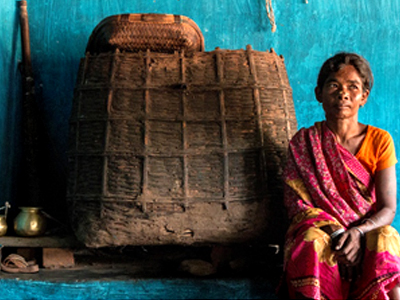
Context | Health care for communities identified as “poorest of poor” (PVTGs)
India is designated as the melting pot of so many ethnic groups dwelling at the same time under the common umbrella of a unified nation. Among these varied ethnic groups, some of them have been categorized under article 342 (1) of the constitution and have been labelled as Scheduled Tribe. In the post independent scenario, several schemes for upliftment of STs were run by the government but it was found that all these groups did not come up to the same level of development. Some of them were at much lower strata than others. Thus, in order to ensure the development of these communities, they were, for the first time in 1975-76 (during 5th Five-year plan) and thereafter-in 1993, identified as poorest of poor among the STs and were designated as Primitive Tribal Groups and thereafter constitution of India renamed and declared as Particularly Vulnerable Tribal Groups (PVTGs). Out of the 75 particularly vulnerable tribal groups, 13 are residing in Odisha; they are becoming increasing vulnerable due to loss of their customary habitat. The health troubles of rural areas especially in the tribal areas need a unique concentration, because the tribal people have typical health problem.
Source: 2019 PhD thesis (Abstract) by Jayanta Kumar Nayak titled “Health Seeking Behaviour and Health Care Services among the Hill Kharia Mayurbhanj District Odisha”, Department of Anthropology, Central University of Orissa URL: http://hdl.handle.net/10603/257651 Date Visited: 21 May 2025
Report by filmmaker Kavita Bahl
It was a unique initiative in many ways. Never before had CMS Vatavaran film festival, the largest festival on environment and wildlife issues in the country, hosted anything like this.
The film festival into its 8th edition this year has always focussed on screening of films and discussions. This was the first time that there was the presence of aboriginal and organic farmers at the festival- with their food system. We were lucky to be a part of the synergy created by many organisations, people’s groups, and, individuals.
The festival-goers which include students, academicians, film-lovers, activists, administrators, teachers and general public, were seen holding extensive discussions with the farmers and also purchasing their produce with great enthusiasm. It became a beautiful space for meaningful interactions.
The fresh food made in traditional ways with authentic ingredients was cooked daily and eaten with great relish at the festival.
It could only be made possible due to partnership and faith displayed by so many people. Lots of hand-holding was done by well-wishers like you whose faith in our ability gave us lots of strength and encouragement to keep going.
CMS VATAVARAN – International Environment & Wildlife Film Festival and Forum is India’s only International Film Festival This is an outcome of CMS’s core commitment to go “beyond research” (www.cmsindia.org) Based on extensive research, this festival (competitive and travelling) was initiated for encouraging environment films and forums that result in perception, practice and policy change. CMS VATAVARAN has been involved multifariously in policy research and programmes evaluation aimed at creating sustainable solutions for environment protection.
MISSION & OBJECTIVE
The festival aims to bring to the fore larger environmental concerns through films. It forges a dialogue and generate timely debate on the topical environmental issues involving the public. A film festival with a difference, CMS VATAVARAN…
a). is an activity forum promoting space for environment issues in the public media;
b). is a movement reaching out to people in various walks of life, it enhances and inspires understanding and appreciation of the natural world and the need for conservation;
c). is an attempt to change minds, attitudes and policies;
d). is an initiative galvanizing civil society and promoting a platform provoking the larger public and opinion making process;
e). encourages and nurtures a new breed of “alternate filmmakers” who are passionate about environmental issues and through their films want to articulate the environmental concerns to initiate dialogue and public debate;
f).stimulates production of high quality films in the fields of wildlife, nature and environment.
Combine the name of any particular state, language or region with that of any tribal (Adivasi) community.
Add keywords of special interest (music, poetry, dance just as health, sacred grove and biodiversity); learn about the rights of Scheduled Tribes such as the “Forest Rights Act” (FRA); and the United Nations “Declaration on the Rights of Indigenous Peoples”, “Universal Declaration of Human Rights”, “women’s rights”, or “children’s right to education”.
Ask a question that includes “tribal” or “Adivasi”, for instance: “Adivasi way of life better?” (or “tribal way of life worse?”)
Specify any particular issue or news item (biodiversity, bonded labour and human trafficking, climate change, ecology, economic development, ethnobotany, ethnomedicine, global warming, hunter-gatherers in a particular region or state, prevention of rural poverty, water access).
For official figures include “scheduled tribe ST” along with a union state or region: e.g. “Chhattisgarh ST community”, “Himalayan tribe”, “Scheduled tribe Tamil Nadu census”, “ST Kerala census”, “Particularly Vulnerable Tribal Group Jharkhand”, “PVTG Rajasthan”, “Adivasi ST Kerala”, “Adibasi ST West Bengal” etc.
SafeSearch browser tips
If your (mobile) browser fails to display “embedded” media contents, Google maps and SafeSearch windows
Try another browser like Firefox, Chrome or Safari available on your device
Ensure your favourite browser is up to date
Close your present browser
Check your browser and mobile (gsm) settings: e.g. permission for video or JavaScript (seen under Preferences >Security >Enable JavaSript)
Restart your computer (smartphone, tablet)
Reconnect to your wifi network or connect to a different one
On some iPhone models the following helps:
>Settings >Safari >scroll down to: SETTING FOR WEBSITES
Return to >Settings and disable “Request Desktop Website” again
Return to the post in Safari and “Reload”which should now display “embedded” contents as intended (with the convenience of browsing the mobile version on a small screen)
Note: similar solutions may also work with other mobile operating systems.
What does it mean to be Indigenous?
Indigenous Peoples can be identified according to certain characteristics:
They are politically and socially marginalized.
Most importantly, they self-identify as Indigenous Peoples.
They share an ancestral link with those who inhabited a country or region before they were colonized or before other peoples became dominant.
They have a strong link to particular territories and the surrounding natural resources.
They have distinct social, economic or political systems, which they are resolved to maintain and reproduce.
They have a distinct language, culture and beliefs.
There are more than 5,000 different Indigenous Peoples around the world comprising 476 million people – around 6.2% of the global population. They are spread across more than 90 countries in every region and speak more than 4,000 languages. | Learn more (Amnesty International) >>