Read the inaugural Speech by Dr. Ivy Hansdak: “Is tribal identity relevant in today’s world?” delivered during the conference titled “Tribes In Transition-II: Reaffirming Indigenous Identity Through Narrative” | Conference report | Video presentation “Tribes in Transition III” (September 2021): Inaugural Session & Keynote Speech by Prof. Anvita Abbi >>
Abstract 28: Runglwo: Undergoing a much awaited Paradigm Shift
Paper presented for “Tribes In Transition-II: Reaffirming Indigenous Identity Through Narrative” (National Conference) – New Delhi
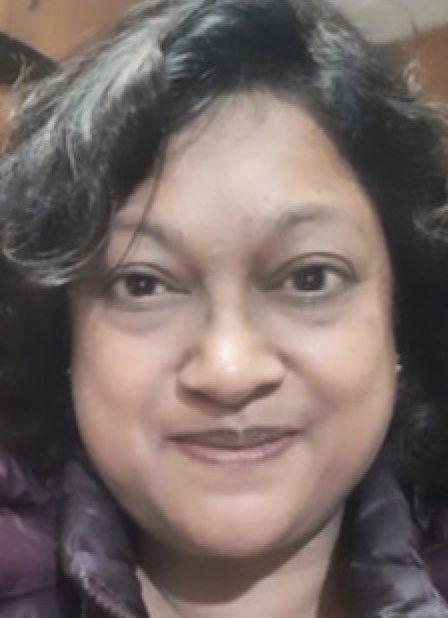
SANDESHA RAYAPA-GARBIYAL
Linguistic Empowerment Cell, Jawaharlal Nehru University, New Delhi
KEYWORDS: RUNGLWO, ASSIMILATION, LANGUAGE, SCRIPT, TECHNOLOGY
In their quest to learn about their new colonies, Imperialists sent their envoys that included missionaries, anthropologists and sociologists to investigate the languages and cultures of the colonies. It was thus through the need of such colonizers that Runglwo was first recorded. Runglwo has three variants (Byangbalwo, Bhyankolwo and Darmalwo) and UNESCO recognizes it as a severely endangered language. Its speakers are the Rungmung or Shaukas from the remote Himalayan town of Dharchula. The community practices vertical transhumance and moves from its base to other regions that include areas in India, Nepal, Tibet and China. Their demography is less than 8,000 and consists of a generation that has moved on or is moving to other Indian cities in its quest for better education and job opportunities. The Rung still follow their elaborate rituals related to birth, marriage and death but they are finding it difficult to pass their ancestral oral language to their children. Runglwo’s survival is therefore at peril. Realizing this, the present generation is applying technology especially from the cellular/mobile world in assimilating and recording the language from among its elders. They have recently been able to get their state government of Uttarakhand to recognize the need of teaching Runglwo in the schools located in their region. The endangered oral language is now going through a major paradigm shift. Though Runglwo is classified under the Tibeto-Burman language family, the elders of the community are choosing the Devanagri script as education was initially introduced to them through the medium of Hindi. This is understandable as most inhabitants residing in Dharchula prefer Hindi. On the other hand, there are many from the next generation preferring the Roman script. Majority are going with the flow as they understand the need of the hour and would rather have work done in any script if it leads to the preservation and possible language regeneration among the next generation of speakers of Runglwo.
BIONOTE: Sandesha Rayapa-Garbiyal, Assistant Professor at JNU’s Linguistic Empowerment Cell (LEC), specializes in the area of English Language Teaching (ELT). With a Masters in Linguistics and on-going research focusing on Syllabus Design for Communication Skills, she aims to use her experience for running positive, focused and energised classes. For over a decade, she has gained experience in planning and developing curriculum in both ‘English as a Second Language’ (ESL) as well as ‘English as a Foreign Language’ (EFL) scenarios. She has also conducted a Communication Skills workshop at IIT, Delhi and prepared candidates for various examinations such as IELTS, GMAT and CAT. She may be contacted at the email ID: sandesha.rayapa@gmail.com
Source: Book of Abstracts for the ICSSR-sponsored Two-Day National Conference Tribes In Transition-II: Reaffirming Indigenous Identity Through Narrative organised by The Department of English & Outreach Programme Jamia Millia Islamia (New Delhi, 27-28 February 2017)
Courtesy Dr. Ivy Hansdak, Assistant Professor, Department of English, Jamia Millia Islamia University New Delhi (email 4 October 2017)
Search Worldcat.org for publications by reputed authors (select “Open Content/Open Access” for freely downloadable content)
Search tips
Combine the name of any particular state, language or region with that of any tribal (Adivasi) community.
Ask a question that includes “tribal” or “Adivasi”, for instance: “Adivasi way of life better?” (or “tribal way of life worse?”)
Add keywords of special interest (music, poetry, dance just as health, sacred grove and biodiversity); learn about the rights of Scheduled Tribes such as the “Forest Rights Act” (FRA); and the United Nations “Declaration on the Rights of Indigenous Peoples”, “Universal Declaration of Human Rights”, “women’s rights”, or “children’s right to education”.
Specify any particular issue or news item (biodiversity, bonded labour and human trafficking, climate change, ecology, economic development, ethnobotany, ethnomedicine, global warming, hunter-gatherers in a particular region or state, prevention of rural poverty, water access).
Find up-to-date information provided by, for and about Indian authors, researchers, officials, and educators
List of sites covered by this Google SafeSearch engine
Ashoka Trust for Research in Ecology and the Environment (ATREE) – www.atree.org
Freedom United – www.freedomunited.org
Government of India (all websites ending on “.gov.in”)
Kalpavriksh Environmental Action Group – https://kalpavriksh.org
Shodhganga (a reservoir of Indian theses) – https://shodhganga.inflibnet.ac.in
Survival International – www.survivalinternational.org
UCLA Digital Library – https://digital.library.ucla.edu
Unesco – https://en.unesco.org
Unesco digital library – https://unesdoc.unesco.org
Unicef – www.unicef.org
United Nations – www.un.org/en
Video Volunteers – www.videovolunteers.org
WorldCat (“the world’s largest library catalog, helping you find library materials online”) – https://worldcat.org
Search tips
Combine the name of any particular state, language or region with that of any tribal (Adivasi) community.
Add keywords of special interest (music, poetry, dance just as health, sacred grove and biodiversity); learn about the rights of Scheduled Tribes such as the “Forest Rights Act” (FRA); and the United Nations “Declaration on the Rights of Indigenous Peoples”, “Universal Declaration of Human Rights”, “women’s rights”, or “children’s right to education”.
Ask a question that includes “tribal” or “Adivasi”, for instance: “Adivasi way of life better?” (or “tribal way of life worse?”)
Specify any particular issue or news item (biodiversity, bonded labour and human trafficking, climate change, ecology, economic development, ethnobotany, ethnomedicine, global warming, hunter-gatherers in a particular region or state, prevention of rural poverty, water access).
For official figures include “scheduled tribe ST” along with a union state or region: e.g. “Chhattisgarh ST community”, “Himalayan tribe”, “Scheduled tribe Tamil Nadu census”, “ST Kerala census”, “Particularly Vulnerable Tribal Group Jharkhand”, “PVTG Rajasthan”, “Adivasi ST Kerala”, “Adibasi ST West Bengal” etc.
SafeSearch browser tips
If your (mobile) browser fails to display “embedded” media contents, Google maps and SafeSearch windows
Try another browser like Firefox, Chrome or Safari available on your device
Ensure your favourite browser is up to date
Close your present browser
Check your browser and mobile (gsm) settings:
e.g. permission for video or JavaScript
(seen under Preferences >Security >Enable JavaSript)
Restart your computer (smartphone, tablet)
Reconnect to your wifi network or connect to a different one
On some iPhone models the following helps:
>Settings >Safari >scroll down to:
SETTING FOR WEBSITES
Enable “Request Desktop Website” (All Websites) temporarily
Return to the map-post in Safari and “Reload”
Return to >Settings and disable “Request Desktop Website” again
Return to the post in Safari and “Reload”which should now display “embedded” contents as intended (with the convenience of browsing the mobile version on a small screen)
Note: similar solutions may also work with other mobile operating systems.