The current predicament of Adivasis
The current predicament of a vast majority of Adivasis is one of sharp erosion in their livelihoods and their life-worlds. Despite assurances of autonomy (the Fifth and Sixth Schedules, the Panchsheel, PESA 1996, Forests Rights Act 2006) and attempts of focused addressal of Adivasi and Tribal issues (including the establishment of an umbrella outfit, the National Council for Tribal Welfare), there are counter structures and programmes that defy the enabling of genuinely decentralised autonomy and the guarantee of democratic participation. For instance, the recently approved ‘Integrated Action Plan’ in Tribal areas overrides the representation of Adivasis in local issues in decision-making processes and arrogates powers of governance to bureaucrats and specialists.
In addition to such contradictory and conflicting measures, the forces of fast-expanding capital, along with the top-down deployment of development models have resulted in large scale displacement in Adivasi regions. Global capital’s access to mineral wealth has also intensified violence of various forms and degrees.
Source: Ch. 2, “Context and Conditions of Adivasi Life Worlds” (p. 5) in THE EDUCATION QUESTION’ FROM THE PERSPECTIVE OF ADIVASIS: CONDITIONS, POLICIES AND STRUCTURES by National Institute of Advanced Studies (Bangalore), March 2012 & UNICEF | Backup (PDF, 4 MB)
“The framers of the Constitution took note of the fact that certain communities in the country were suffering from extreme social, educational and economic backwardness arising out of age-old practice of untouchability and certain others on account of this primitive agricultural practices, lack of infrastructure facilities and geographical isolation, and who need special consideration for safeguarding their interests and for their accelerated socio-economic development. These communities were notified as Scheduled Castes and Scheduled Tribes as per provisions contained in Clause 1 of Articles 341 and 342 of the Constitution respectively.” – National Commission for Scheduled Tribes
(Date Visited: 21 August 2022)
[Bold typeface added above for emphasis]
The preamble [to India’s Constitution] sets out objectives of securing to all citizens social, economic and political justice; liberty of thought, expression, belief, faith and worship; equality of status and of opportunity, and aims to promote fraternity and ensure the unity and integrity of the Nation. | Learn more about “How Indians made Constitution a success” | Fundamental Rights according to the Constitution of India: PDF-repository (2 MB), p. 6 >>
Tips
- for up-to-date information, visit the homepage of the National Commission for Scheduled Tribes >>
- search for “Rights of Scheduled Tribes” or related keywords in the search fields seen below
Who are Scheduled Tribes?
The framers of the Constitution took note of the fact that certain communities in the country were suffering from extreme social, educational and economic backwardness on account of the primitive agricultural practices, lack of infrastructure facilities and geographical isolation. The Constitution of India in Article 366 (25) prescribe that the Scheduled Tribes means such tribes or tribal communities as are deemed under Article 342 of the Constitution to be Scheduled Tribes.
What are the Rights of Scheduled Tribes?
The Constitution of India seeks to secure for all its citizens, among other things, social and economic justice, equality of status and opportunity and assures the dignity of the individual. All Rights available to the Citizens of India, enshrined in the Constitution or any law of the land or any order of the Government are equally available to the Scheduled Tribes also.
Are there any privileges or special rights for Scheduled Tribes?Scheduled Tribes being backward and isolated from the rest of the population are not able to exercise their rights. In order to empower them to be able to exercise their rights special provisions have been made in the Constitution. Framers of the Constitution took note of this fact and incorporated enabling provisions in the Constitution in the form of reservation and measures to be taken to empower them to be able to avail the opportunities. Some people call these provisions as privileges for the Scheduled Tribes but these are only the enabling provisions so that Scheduled Tribes can avail the opportunities and exercise their rights and safeguards.
Source: FREQUENTLY ASKED QUESTIONS | National Commission for Scheduled Tribes
Address: http://www.ncst.gov.in/content/frequently-asked-questions
Date Visited: 2 July 2019
“We must consider the environmental dimension of justice now. The challenge of climate change is so enormous that it forces us to redefine ‘rights’.” – Droupadi Murmu | Speeches by the President of India | United Nations on climate change >>

Universal Declaration of Human Rights & Human Rights Day >>
The National Human Right Commission (NHRC) describes “crimes like rape, molestation, torture, fake encounter in police custody as manifestations of a systemic failure to protect human rights”;
It reports that “rights of the people were violated or negligence was shown by a public servant in the prevention of such violations”; NHRC concludes:
“Atrocities against vulnerable sections of society – women, children, disabled and the elderly – are often compounded when they belong to the Scheduled Castes and Scheduled Tribes”; and therefore demands:
India must ratify the International Convention against Torture.
Download | Backup (PDF, 500 KB) >>
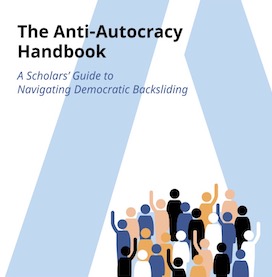
“A call to action, resilience, and collective defence of democracy, truth, and academic freedom”
The Anti-Autocracy Handbook is a call to action, resilience, and collective defence of democracy, truth, and academic freedom in the face of mounting authoritarianism. […]
Because open inquiry and dissent are central to science and academia—qualities antithetical to authoritarian control—academia is often among the first targets of autocrats. To help scholars resist authoritarian developments, the handbook highlights both historic and contemporary measures aimed at attacking scholars, their institutional environments, and their scholarship.
The handbook also sets out a framework for action based on personal risk level—low, medium, high, or extreme. This is designed to help scholars think about their own risk and purposefully choose actions in line with it. The handbook considers tools for enhancing digital safety and highlights the importance of ongoing documentation, preserving imperilled data, and creating distributed archives as a defence against erasure. It also calls on scholars to tell their stories—publicly or anonymously—to inspire others, maintain accountability and preserve a historical record.
Accompanying the handbook is a living wiki that will continue to incorporate new developments and provide updates on global efforts by scholars to push back against authoritarianism and safeguard the democratic foundations that enable free inquiry.
Source: “The Anti-Autocracy Handbook: A Scholars’ Guide to Navigating Democratic Backsliding” by
URL: https://zenodo.org/records/15696097
Date Visited: 20 April 2026
Albert Camus on service of truth and the service of liberty – Nobelprize.org
Excerpt from Albert Camus’ speech at the Nobel Banquet at the City Hall in Stockholm, December 10, 1957 | Read the full speech: https://www.nobelprize.org/prizes/literature/1957/camus/speech/ >>
By the same token, the writer’s role is not free from difficult duties. By definition he cannot put himself today in the service of those who make history; he is at the service of those who suffer it. Otherwise, he will be alone and deprived of his art. Not all the armies of tyranny with their millions of men will free him from his isolation, even and particularly if he falls into step with them. But the silence of an unknown prisoner, abandoned to humiliations at the other end of the world, is enough to draw the writer out of his exile, at least whenever, in the midst of the privileges of freedom, he manages not to forget that silence, and to transmit it in order to make it resound by means of his art.
None of us is great enough for such a task. But in all circumstances of life, in obscurity or temporary fame, cast in the irons of tyranny or for a time free to express himself, the writer can win the heart of a living community that will justify him, on the one condition that he will accept to the limit of his abilities the two tasks that constitute the greatness of his craft: the service of truth and the service of liberty. Because his task is to unite the greatest possible number of people, his art must not compromise with lies and servitude which, wherever they rule, breed solitude. Whatever our personal weaknesses may be, the nobility of our craft will always be rooted in two commitments, difficult to maintain: the refusal to lie about what one knows and the resistance to oppression.
Find up-to-date information provided by, for and about Indian authors, researchers, officials, and educators
List of sites covered by this Google SafeSearch engine
Ashoka Trust for Research in Ecology and the Environment (ATREE) – www.atree.org
Freedom United – www.freedomunited.org
Government of India (all websites ending on “.gov.in”)
Kalpavriksh Environmental Action Group – https://kalpavriksh.org
Shodhganga (a reservoir of Indian theses) – https://shodhganga.inflibnet.ac.in
Survival International – www.survivalinternational.org
UCLA Digital Library – https://digital.library.ucla.edu
Unesco – https://en.unesco.org
Unesco digital library – https://unesdoc.unesco.org
Unicef – www.unicef.org
United Nations – www.un.org/en
Video Volunteers – www.videovolunteers.org
WorldCat (“the world’s largest library catalog, helping you find library materials online”) – https://worldcat.org
Search tips
Combine the name of any particular state, language or region with that of any tribal (Adivasi) community.
Add keywords of special interest (music, poetry, dance just as health, sacred grove and biodiversity); learn about the rights of Scheduled Tribes such as the “Forest Rights Act” (FRA); and the United Nations “Declaration on the Rights of Indigenous Peoples”, “Universal Declaration of Human Rights”, “women’s rights”, or “children’s right to education”.
Ask a question that includes “tribal” or “Adivasi”, for instance: “Adivasi way of life better?” (or “tribal way of life worse?”)
Specify any particular issue or news item (biodiversity, bonded labour and human trafficking, climate change, ecology, economic development, ethnobotany, ethnomedicine, global warming, hunter-gatherers in a particular region or state, prevention of rural poverty, water access).
For official figures include “scheduled tribe ST” along with a union state or region: e.g. “Chhattisgarh ST community”, “Himalayan tribe”, “Scheduled tribe Tamil Nadu census”, “ST Kerala census”, “Particularly Vulnerable Tribal Group Jharkhand”, “PVTG Rajasthan”, “Adivasi ST Kerala”, “Adibasi ST West Bengal” etc.
SafeSearch browser tips
If your (mobile) browser fails to display “embedded” media contents, Google maps and SafeSearch windows
Try another browser like Firefox, Chrome or Safari available on your device
Ensure your favourite browser is up to date
Close your present browser
Check your browser and mobile (gsm) settings:
e.g. permission for video or JavaScript
(seen under Preferences >Security >Enable JavaSript)
Restart your computer (smartphone, tablet)
Reconnect to your wifi network or connect to a different one
On some iPhone models the following helps:
>Settings >Safari >scroll down to:
SETTING FOR WEBSITES
Enable “Request Desktop Website” (All Websites) temporarily
Return to the map-post in Safari and “Reload”
Return to >Settings and disable “Request Desktop Website” again
Return to the post in Safari and “Reload”which should now display “embedded” contents as intended (with the convenience of browsing the mobile version on a small screen)
Note: similar solutions may also work with other mobile operating systems.
Note: for official figures include “scheduled tribe ST” along with a union state or region, e.g. “Chhattisgarh ST community”, “Scheduled tribe Tamil Nadu census”, “ST Kerala census”, “Particularly Vulnerable Tribal Group Jharkhand”, “PVTG Rajasthan”, “Adivasi ST Kerala”, “Adibasi ST West Bengal” etc.
Official details: State/UT wise population of STs
NAME OF THE PARTICULARLY VULNERABLE TRIBAL GROUPS (PTGs) (EARLIER CALLED AS PRIMITIVE TRIBAL GROUPS) – STATE / UT WISE
[UT = Union Territories].
1. Andhra Pradesh
1. Bodo Gadaba
2. Bondo Poroja
3. Chenchu
4. Dongria Khond
5. Gutob
Gadaba
6. Khond Poroja
7. Kolam
8. Kondareddis
9. Konda Savaras
10. Kutia Khond
11. Parengi Poroja
12. Thoti
2. Bihar (including Jharkhand)
13. Asurs
14. Birhor
15. Birjia
16. Hill Kharia
17. Korwas
18. Mal Paharia
19. Parhaiyas
20. Sauria Paharia
21. Savar
3. Gujarat
22. Kathodi
23. Kotwalia
24. Padhar
25. Siddi
26. Kolgha
4. Karnataka
27. Jenu Kuruba
28. Koraga
5. Kerala
29. Cholanaikayan (a section of Kattunaickans)
30. Kadar
31. Kattunayakan
32. Kurumbas
33. Koraga
6. Madhya Pradesh (including Chhattisgarh)
34. Abujh Marias
35. Baigas
36. Bharias
37. Hill Korbas
38. Kamars
39. Saharias
40. Birhor
7. Maharashtra
41. Katkaria (Kathodia)
42. Kolam
43. Maria Gond
8. Manipur
44. Marram Nagas
9. Orissa
45. Birhor
46. Bondo
47. Didayi
48. Dongria-Khond
49. Juangs
50. Kharias
51. Kutia Kondh
52. Lanjia Sauras
53. Lodhas
54. Mankidias
55. Paudi Bhuyans
56. Soura
57. Chuktia Bhunjia
10. Rajasthan
58. Seharias [Sahariya]
11. Tamil Nadu
59. Kattu Nayakans
60. Kotas
61. Kurumbas
62. Irulas
63. Paniyans
64. Todas
12. Tripura
65. Reangs
13. Uttar Pradesh (including Uttarakhand)
66. Buxas
67. Rajis
14. West Bengal
68. Birhor
69. Lodhas
70. Totos
15. Andaman & Nicobar Islands
71. Great Andamanese
72. Jarawas
73. Onges
74. Sentinelese
75. Shom Pens
Source: State/UT wise population of STs and their percentage to the total population in the respective states/UTs and to the total STs population in the Country, as per Census 2001 | National Commission for Scheduled Tribes
Address: https://www.ncst.gov.in/content/stateut-wise-population-sts-and-their-percentage-total-population-respective-statesuts-and
Date Visited: 30 July 2021
Backup file dated 6 April 2017 (PDF, 19 KB)