eJournal | Involving tribal communities in conservation: Sustainable resource use and forest conservation by the Kaani community of Kanyakumari – Tamil Nadu
3. Sustainable resource use and forest conservation by the Kaani indigenous community of Kanyakumari forests in the Western Ghats, India (Ch. 3, pp. 37-55) in:
“Knowing our Lands and Resources: Indigenous and Local Knowledge and Practices related to Biodiversity and Ecosystem Services in Asia” by Madhav Karki, Rosemary Hill, Dayuan Xue, William Alangui, Kaoru Ichikawa and Peter Bridgewater (eds.). 2017. Knowledges of Nature 10. UNESCO: Paris. pp. 200.
References to more contributions by Davidson Sargunam
Books:
Davidson Sargunam S et al, 2016,Cultural, Spiritual and Linguistic Linkages of Biodiversity
with reference to the Kaani tribe of Kanyakumari in Perspectives on Biodiversity of India,
Volume II, Part 2, A. Bijukumar & others, Centre for Innovation in Science & Social Action,
Thiruvananthapuram, Kerala, India
Davidson Sargunam, S et al., 2013, Biodiversity for Economic Security, Proceedings of the National
Conference on Biodiversity-Green Strategies for Sustainable Development, GK Publishers,
Chennai-45, India
Davidson Sargunam, S et al., 2011, Economic Value of Forests and Economic Development of the
Kaani tribe of Kanyakumari District, Tamil Nadu ,BRICS, Economic Shift, Excel Publishers, New
Delhi-67, India
Davidson Sargunam, S et al, 2010, India Vision 2020- Sustainable Development of Land, Forest and
Bio-diversity resources of Kanyakumari forests
Websites:
Davidson Sargunam S et al, Mushrooms in the food culture of the Kaani tribe of Kanyakumari,
Environmental Profile of S Davidson Sargunam (Nagercoil)
Biographical notes on (late) environmental educationist Davidson Sargunam
Davidson Sargunam also known as S S Davidson serves to conserve the pristine forest ecology of Kanyakumari forests in Western Ghats, India, which is a bio-diversity Hot Spot, UNESCO Heritage Center and part of the Kalakad-Mundanthurai Tiger Reserve (KMTR). He has the firm conviction that forest conservation and sustainable development are highly dependent on the development of the inhabitant Kaani tribal community’s social, economic, cultural and environmental areas and they should be sensitized and made partakers in forest conservation. […]
He serves as a Resource Person in seminars related to Environment organized by the National Service Scheme for Higher secondary School students (17-18 years). He has presented many Papers in seminars and some are published in books with ISBN. […]
To promote the health status of the indigenous people, he conducts regular General Medical Camps and Eye Camps with doctors from the Government Medical College. He has spotted 12 edible mushrooms in the wild in the Western Ghats and to conserve them and their genes, he imparts training in mushroom culture to Kaani people for their consumption, so that they are not destroyed in the wild. […]
In 2016, he was invited by UNESCO to Thailand and Nepal to explain his conepts on the tools used by the Kaani tribal people to counter Human Versus Animal Conflict, which is referred ad Indigenous Local Knowledge (ILK ) and declared him as an ILK Expert.
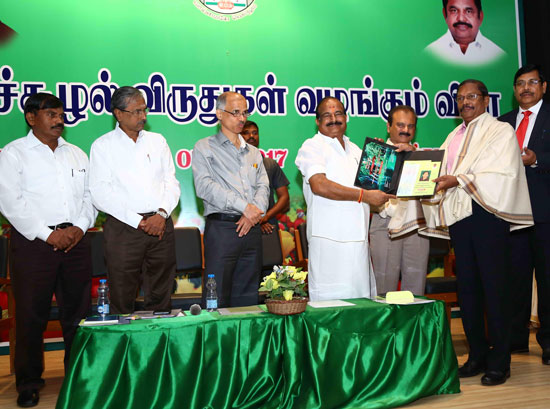
In November 2017, he was awarded with Tamil Nadu State Environment Award with a title Eco-Warrior for his commitment and dedication in Environmental Management.
Source: email dated 23 January 2018
Find up-to-date information provided by, for and about Indian authors, researchers, officials, and educators
List of sites covered by this Google SafeSearch engine
Ashoka Trust for Research in Ecology and the Environment (ATREE) – www.atree.org
WorldCat (“the world’s largest library catalog, helping you find library materials online”) – https://worldcat.org
Search tips
Combine the name of any particular state, language or region with that of any tribal (Adivasi) community.
Add keywords of special interest (music, poetry, dance just as health, sacred grove and biodiversity); learn about the rights of Scheduled Tribes such as the “Forest Rights Act” (FRA); and the United Nations “Declaration on the Rights of Indigenous Peoples”, “Universal Declaration of Human Rights”, “women’s rights”, or “children’s right to education”.
Ask a question that includes “tribal” or “Adivasi”, for instance: “Adivasi way of life better?” (or “tribal way of life worse?”)
Specify any particular issue or news item (biodiversity, bonded labour and human trafficking, climate change, ecology, economic development, ethnobotany, ethnomedicine, global warming, hunter-gatherers in a particular region or state, prevention of rural poverty, water access).
For official figures include “scheduled tribe ST” along with a union state or region: e.g. “Chhattisgarh ST community”, “Himalayan tribe”, “Scheduled tribe Tamil Nadu census”, “ST Kerala census”, “Particularly Vulnerable Tribal Group Jharkhand”, “PVTG Rajasthan”, “Adivasi ST Kerala”, “Adibasi ST West Bengal” etc.
SafeSearch browser tips
If your (mobile) browser fails to display “embedded” media contents, Google maps and SafeSearch windows
Try another browser like Firefox, Chrome or Safari available on your device
Ensure your favourite browser is up to date
Close your present browser
Check your browser and mobile (gsm) settings: e.g. permission for video or JavaScript (seen under Preferences >Security >Enable JavaSript)
Restart your computer (smartphone, tablet)
Reconnect to your wifi network or connect to a different one
On some iPhone models the following helps:
>Settings >Safari >scroll down to: SETTING FOR WEBSITES
Return to >Settings and disable “Request Desktop Website” again
Return to the post in Safari and “Reload”which should now display “embedded” contents as intended (with the convenience of browsing the mobile version on a small screen)
Note: similar solutions may also work with other mobile operating systems.