Writers Talk Politics | Ngugi wa Thiong’o in conversation with Sudhanva Deshpande
Commenting on Ekalavya “who ends up being disabled despite that Dhrona never really taught him – he taught himself – but even with that he is disabled so he cannot compete with the sons and daughters of the powerful. So that theme of disabling the regular guy, the working person or whatever, was very important to me” […] They do the work, they produce, and yet do not always get the fruits of what they produce, or even get punished for actually producing or losing their language which contains information, history, technology, skills […] (from 4:00 onwards)
Discusssing his more recent book “Secure the Base” about imperialism and colonialism, language, inequitable distribution of the world’s resources (from 5:20 onwards): “I believe that it is good that people of different cultures and histories make contact with each other […] but that contact must not be that of the rider and the horse.”
Ngũgĩ wa Thiong’o: “I want to revive the connections between Africa and Asia”
The writer in conversation with Sudhanva Deshpande
April 16, 2018This is the first part of a conversation between Ngũgĩ wa Thiong’o and Sudhanva Deshpande. The writer was in Delhi for the ILF Samanvay Translations Series-2018, organised in collaboration with Seagull Books, at the Indian Habitat Centre. In this conversation with Deshpande, actor and publisher, he talks of the presence of India in his novels; the need to fight against imperialism; and the necessity to secure one’s base in order to resist the coloniser.
Source: https://indianculturalforum.in/2018/04/16/ngugi-wa-thiongo-secure-the-base/
Date Accessed: 11 July 2021
Search Worldcat.org for publications by reputed authors (select “Open Content/Open Access” for freely downloadable content)
Search tips
Combine the name of any particular state, language or region with that of any tribal (Adivasi) community.
Ask a question that includes “tribal” or “Adivasi”, for instance: “Adivasi way of life better?” (or “tribal way of life worse?”)
Add keywords of special interest (music, poetry, dance just as health, sacred grove and biodiversity); learn about the rights of Scheduled Tribes such as the “Forest Rights Act” (FRA); and the United Nations “Declaration on the Rights of Indigenous Peoples”, “Universal Declaration of Human Rights”, “women’s rights”, or “children’s right to education”.
Specify any particular issue or news item (biodiversity, bonded labour and human trafficking, climate change, ecology, economic development, ethnobotany, ethnomedicine, global warming, hunter-gatherers in a particular region or state, prevention of rural poverty, water access).
Tips
- For more related posts, click on the hyperlinks seen below this post (Categories, Tags)
- Interview with Ngũgĩ wa Thiong’o in The Guardian Books (12 March 2018): ‘Resistance is the best way of keeping alive‘
- To find publications and authors dealing with the above issues, use the search window seen here (e.g. “Ngũgĩ wa Thiong’o”, “Sudhanva Deshpande”, “Ekalavya [Eklavya] tribal community”, “Ekalavya Mahabharata”, “boarding schools tribal”, “tribal ashramshala”, “tribal residential schools India”, “Santal Revolt of 1855”):
Residential, Ashram and Factory schools
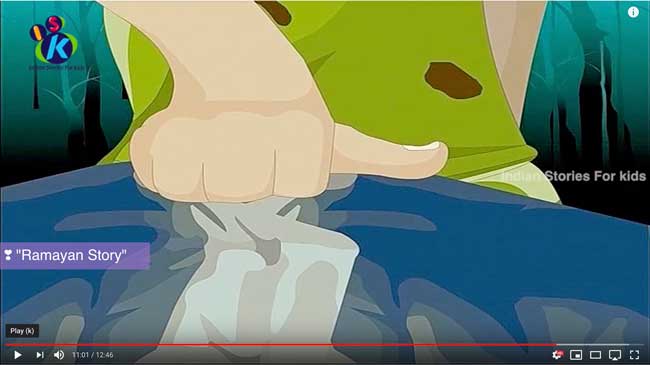
Ekalavya (Eklavya, Eklabya): the name of a legendary archer prodigy “who, being a Nishada [Sanskrit Niṣāda, “tribal, hunter, mountaineer, degraded person, outcast”], had to give his thumb as a fee to the brahmin guru thus terminating his skill as an archer.” – Romila Thapar (“The epic of the Bharatas”) | Read the full paper here | Backup download link (pdf) >>
More about India’s “Ekalavya Residential School Scheme”, “Ashram Schools” and “Factory schools”
Ekalavya Residential School Scheme (EMR): a network of boarding schools where tribal children are to be educated in accordance with rules and syllabi provided by the government; such schools are being designated as “Eklavya Model Residential School (EMR)” with the objective of empowering students “to be change agent, beginning in their school, in their homes, in their village and finally in a large context.” – Government Guidelines 2010 | Backup >>
Residential School and Ashram School
In some regions there are similar “Residential Schools” and “Ashram Schools” for tribal children, as in Tripura where they are managed by a society called “Tripura Tribal Welfare Residential Educational Institutions Society (TTWREIS)” – Tribal Welfare Department, Government of Tripura
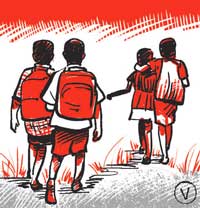
Factory schools “exist to turn tribal and indigenous children – who have their own language and culture – into compliant workers-of-the-future. The world’s largest Factory School stated that it turns ‘Tax consumers into tax payers, liabilities into assets’.” – survivalinternational.org/factoryschools | Learn more >>
Learn more about Childrens rights: UNICEF India | Ekalavya (Eklavya, Eklabya), EMR & Factory schools | Rights of Indigenous Peoples >>