Abstract 6: Education as a means of Entrepreneurial Exploration: A Multiple Case Study Approach among the Tribes of Odisha
Paper presented for “Tribes In Transition-II: Reaffirming Indigenous Identity Through Narrative” (National Conference) – New Delhi
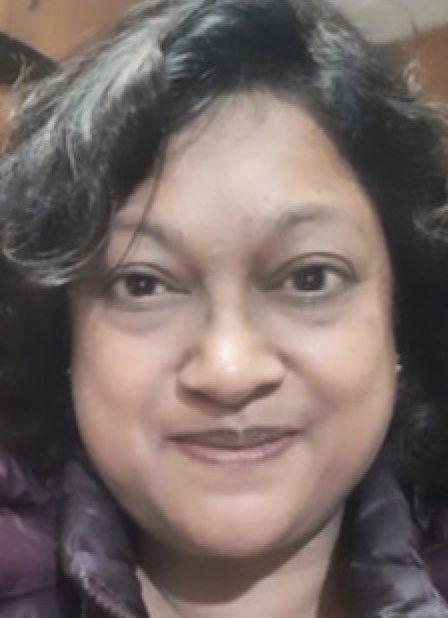
BIDYUT SUMAN EKKA
Tata Institute of Social Sciences, Mumbai
KEYWORDS: FORMAL EDUCATION, VOCATIONAL TRAINING, TRIBES, GLOBALIZATION, CREDIT ENTREPRENEURSHIP
Education has been debated as a tool to achieve holistic sustainable development of a society. When it comes to marginalised sections of the society its implication becomes more essential. Indian tribes are also the marginalised section of the Indian society. Traditionally they had been living in a sustainable ecosystem with their own socio-economic and cultural set up. The tribal lifestyle and ecosystem have been thoroughly disturbed since the time of the impingement of outsiders during the colonial period and mainly after independence. In the name of development and globalisation the exploitation has increased. A lot of programmes and policies have been implemented for the development of the tribals. Education being an essential means of development has also been promoted among the tribes. Various studies show high school dropout cases among the tribals, but there are tribals who have been able to have secondary, higher secondary and higher education paving way for many employment and livelihood opportunities. Many tribals have even been able to access vocational training programme. Education has also helped them in gaining access to various credit facilities to start with various employment opportunities.
This paper is intending to explore the rural tribals usability of the formal and informal education in exploring entrepreneurial ventures. The study has been done in north-western part of India. A multiple case study approach has been used to understand in depth about the journey of the selected rural tribal entrepreneurs. In this 4 in-depth cases have been explored of tribal individuals having entrepreneurial activities. The study discusses about the formal and informal education and its knowledge that has been used in accessing credit under the Government programmes and applying the knowledge in technical and managerial aspect of their business practices.
BIONOTE: Bidyut Suman Ekka is currently pursuing her PhD at the Tata Institute of Social Sciences, Mumbai. She may be contacted at the email ID: paulinasuman@gmail.com
Source: Book of Abstracts for the ICSSR-sponsored Two-Day National Conference Tribes In Transition-II: Reaffirming Indigenous Identity Through Narrative organised by The Department of English & Outreach Programme Jamia Millia Islamia (New Delhi, 27-28 February 2017)
Courtesy Dr. Ivy Hansdak, Assistant Professor, Department of English, Jamia Millia Islamia University New Delhi (email 4 October 2017)
Read the inaugural Speech by Dr. Ivy Hansdak: “Is tribal identity relevant in today’s world?” delivered during the conference titled “Tribes In Transition-II: Reaffirming Indigenous Identity Through Narrative” | Conference report | Video presentation “Tribes in Transition III” (September 2021): Inaugural Session & Keynote Speech by Prof. Anvita Abbi >>
Reports in the Indian press | List of periodicals included in this search >>
Search tips
Combine the name of any particular state, language or region with that of any tribal (Adivasi) community.
Add keywords of special interest (music, poetry, dance just as health, sacred grove and biodiversity); learn about the rights of Scheduled Tribes such as the “Forest Rights Act” (FRA); and the United Nations “Declaration on the Rights of Indigenous Peoples”, “Universal Declaration of Human Rights”, “women’s rights”, or “children’s right to education”.
Ask a question that includes “tribal” or “Adivasi”, for instance: “Adivasi way of life better?” (or “tribal way of life worse?”)
Specify any particular issue or news item (biodiversity, bonded labour and human trafficking, climate change, ecology, economic development, ethnobotany, ethnomedicine, global warming, hunter-gatherers in a particular region or state, prevention of rural poverty, water access).
For official figures include “scheduled tribe ST” along with a union state or region: e.g. “Chhattisgarh ST community”, “Himalayan tribe”, “Scheduled tribe Tamil Nadu census”, “ST Kerala census”, “Particularly Vulnerable Tribal Group Jharkhand”, “PVTG Rajasthan”, “Adivasi ST Kerala”, “Adibasi ST West Bengal” etc.
SafeSearch browser tips
If your (mobile) browser fails to display “embedded” media contents, Google maps and SafeSearch windows
Try another browser like Firefox, Chrome or Safari available on your device
Ensure your favourite browser is up to date
Close your present browser
Check your browser and mobile (gsm) settings:
e.g. permission for video or JavaScript
(seen under Preferences >Security >Enable JavaSript)
Restart your computer (smartphone, tablet)
Reconnect to your wifi network or connect to a different one
On some iPhone models the following helps:
>Settings >Safari >scroll down to:
SETTING FOR WEBSITES
Enable “Request Desktop Website” (All Websites) temporarily
Return to the map-post in Safari and “Reload”
Return to >Settings and disable “Request Desktop Website” again
Return to the post in Safari and “Reload”which should now display “embedded” contents as intended (with the convenience of browsing the mobile version on a small screen)
Note: similar solutions may also work with other mobile operating systems.
Search Worldcat.org for publications by reputed authors (select “Open Content/Open Access” for freely downloadable content)
Search tips
Combine the name of any particular state, language or region with that of any tribal (Adivasi) community.
Ask a question that includes “tribal” or “Adivasi”, for instance: “Adivasi way of life better?” (or “tribal way of life worse?”)
Add keywords of special interest (music, poetry, dance just as health, sacred grove and biodiversity); learn about the rights of Scheduled Tribes such as the “Forest Rights Act” (FRA); and the United Nations “Declaration on the Rights of Indigenous Peoples”, “Universal Declaration of Human Rights”, “women’s rights”, or “children’s right to education”.
Specify any particular issue or news item (biodiversity, bonded labour and human trafficking, climate change, ecology, economic development, ethnobotany, ethnomedicine, global warming, hunter-gatherers in a particular region or state, prevention of rural poverty, water access).