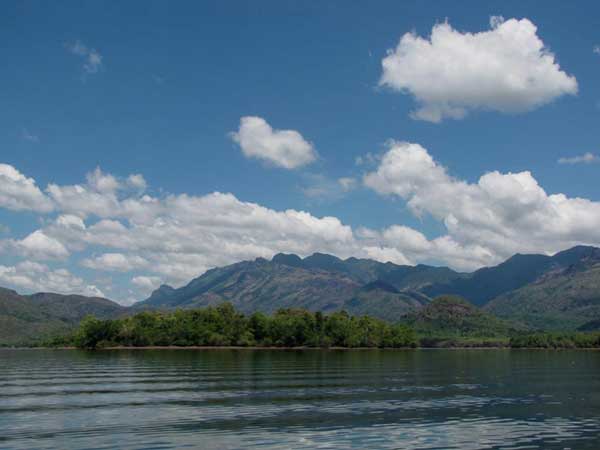
Photo courtesy Davidson Sargunam >>
Facts and figures: India’s biological, cultural and geographic diversity
Spread over 3,287,240 km2 and despite a total human population of over 1,210,000,000, India represents a wide spectrum of biological, cultural and geographic diversity. It has been identified as one of the top 12 global biodiversity hotspots and has 91 eco-cultural zones inhabited by 4,635 ethnic communities. India also has amongst the largest indigenous/tribal population, constituting 8.08% of the country’s population, representing 461 tribes. The term ‘Indigenous Peoples’ is not officially recognized in the country, instead the Constitution of India uses the term ‘Scheduled Tribes’. The total forest cover is estimated to be approximately 20% of the total area of the country. About 1,70,379 villages with a population of 10,674,334 inhabit areas in close proximity of forests.
Source: RECOGNITION AND SUPPORT OF ICCAs IN INDIA by Neema Pathak Broome and Tushar Dash, p. 4 | PDF-Repository
URL: https://kalpavriksh.org/wp-content/uploads/2021/01/IndiaICCARecognition_Final_SEPT2012-as-published.pdf
Date Visited: 10 March 2025
It is interesting to learn that a hill in Kanyakumari district is named after Tiruvalluvar
Heard of a hill dedicated to Tiruvalluvar? The Kanyakumari Historical and Cultural Research Centre recently brought to light the existence of Valluvan Kal Potrai in Koovaikkadu hamlet, Surulodu panchayat, Kalkulam taluk, Kanyakumari district. The author, along with two others, went to the hilltop to speak to the 105-year-old leader of the Kaanis, Kaaliyan Kaani. […]
According to Kaaliyan Kaani, locals call him Moottukaani, Tiruvalluvar was a king who had ruled the area in ancient days. Both the king and his queen were fond of the Kaanis’ honey and Thinai (little millet) flour. The place where Tiruvalluvar was said to have taken rest is called Valluvan Kal Potrai and the adjoining hill was named after his wife as Valluvathi Potrai.
The inhabitants started worshipping him after his death and the footprints carved atop the Valluvan hill is revered by them. An inscription on the wall of a well at Koovaikkadu has the name of `Tiruvalluvar Kal Malai’ engraved on it. Tiruvalluvar is believed to have lived in a place surrounded by four kinds of land — kurinji (mountainous), mullai (pastoral), marutham (agricultural) and neithal (maritime). Tirukkural mentions the techniques people had employed in all the four kinds of land. […]
Also, Tiruvalluvar’s birth place, Tirunayanarkurichi, lies between Muttom sea and an irrigation tank called Periyakulam. This is contrary to the popular belief that he belonged to Chennai or Madurai as held by some.
Source: S. PADMANABHAN Padmanabhan, Hindu : Entertainment Chennai / Land & People : Tiruvalluvar, the king
Address: http://www.thehindu.com/fr/2005/04/29/stories/2005042900020300.htm
Date Visited: Fri Jul 14 2017 18:18:39 GMT+0200 (CEST)
A historical research centre here has claimed to have identified and located the ancient territorial unit, believed to have been ruled by Tamil saint-poet Thiruvalluvar | To read the full article, click here >>
A historical research centre here has claimed to have identified and located the ancient territorial unit, believed to have been ruled by Tamil saint-poet Thiruvalluvar, who lived 2000 years ago, in the hilly tracts of Kanyakumari district of Tamil Nadu.
A three-member team of the Kanyakumari Historical and Cultural Research Centre, headed by its General Secretary Dr S Padmanabhan, had discovered a hill named after the poet and recorded several facts from a tribal leader, which are reflected in ‘Thirukkural‘, a treatise authored by Thiruvalluvar.
A release from the Centre said that the ‘Valluvanadu’ had appeared in a copper plate inscription of the ninth and 10th century AD. The recent field research undertaken by the team confirmed that Thiruvalluvar was born in Thirunayanarkurichi in the erstwhile Valluvanadu and not Mylapore in Chennai or Madurai.
The team interviewed the head of the Kaani tribes, named ‘Kaliyan Kaani’ and locally known as Moottukaani, aged about 105, and recorded several new facts, which are reflected in the Thirukkural, it said. […]
“The study of Kaani settlement reveals that their lifestyle and mode of worship reflects Thirukkural. It also confirmed the existence of four kinds of land as classified by Tholkappiyar, another ancient poet,” the release said. […]
Source: “Thiruvalluvar’s kingdom found, say researchers”, Hindustan Times, 28 April 28,2005
Address: https://www.hindustantimes.com/india/thiruvalluvar-s-kingdom-found-say-researchers/story-A1GNIWlv4smxLrr2hQ5TpK.html
Date Visited: 23 May 2021
[Bold typeface added above for emphasis]
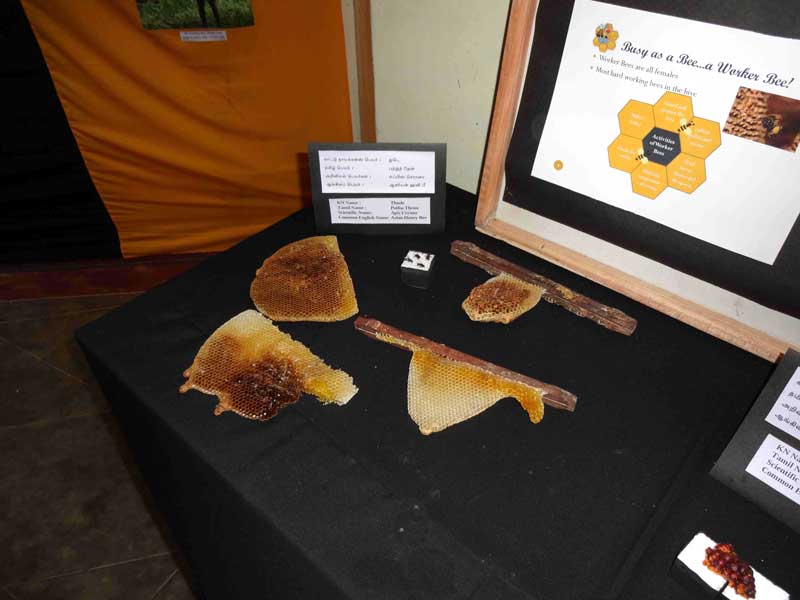
The Scheduled Tribes and Other Traditional Forest Dwellers (Forest Rights Act) gives members of tribal communities the right “to collect, use, and dispose of minor forest produce including bamboo, brush wood, stumps, cane, tussar, cocoons, honey, wax, lac, tendu or kendu leaves, medicinal plants and herbs, roots, tubers.” – Azim Premji University Team
Explore India’s tribal cultural heritage with the help of another interactive map >>
Up-to-date reports by Indian experts and journalists
List of sites covered by this Google SafeSearch engine
Academia.edu (platform for academics to share research papers) – www.academia.edu
Archive.org – https://archive.org
Centre for Science and Environment – https://www.cseindia.org
Current Conservation – https://www.currentconservation.org
Development and Cooperation (D+C) https://www.dandc.eu
Down To Earth (India) – www.downtoearth.org.in
India Environment Portal – www.indiaenvironmentportal.org.in
Harnessing Nature Magazine – https://harnessingnature.online
Kalpavriksh Environmental Action Group – https://kalpavriksh.org
Mongabay-India – https://india.mongabay.com
M S Swaminathan Research Foundation – www.mssrf.org
Navdanya (protecting India’s biodiversity based food heritage) – https://navdanya.org
People’s Archive of Rural India – https://ruralindiaonline.org/
Third World Network (Penang, Malaysia) – https://twn.my
The Shola Trust (nature conservation in the Nilgiri region) – www.thesholatrust.org
TribalConnect (“uplift and benefit the community without adversely affecting or changing their vernacular”) – https://tribalconnect.org.in
WorldCat (“the world’s largest library catalog, helping you find library materials online”) – https://worldcat.org
More SafeSearch on this website
Search tips
Combine the name of any particular state, language or region with that of any tribal (Adivasi) community.
Add keywords of special interest (music, poetry, dance just as health, sacred grove and biodiversity); learn about the rights of Scheduled Tribes such as the “Forest Rights Act” (FRA); and the United Nations “Declaration on the Rights of Indigenous Peoples”, “Universal Declaration of Human Rights”, “women’s rights”, or “children’s right to education”.
Ask a question that includes “tribal” or “Adivasi”, for instance: “Adivasi way of life better?” (or “tribal way of life worse?”)
Specify any particular issue or news item (biodiversity, bonded labour and human trafficking, climate change, ecology, economic development, ethnobotany, ethnomedicine, global warming, hunter-gatherers in a particular region or state, prevention of rural poverty, water access).
For official figures include “scheduled tribe ST” along with a union state or region: e.g. “Chhattisgarh ST community”, “Himalayan tribe”, “Scheduled tribe Tamil Nadu census”, “ST Kerala census”, “Particularly Vulnerable Tribal Group Jharkhand”, “PVTG Rajasthan”, “Adivasi ST Kerala”, “Adibasi ST West Bengal” etc.
SafeSearch browser tips
If your (mobile) browser fails to display “embedded” media contents, Google maps and SafeSearch windows
Try another browser like Firefox, Chrome or Safari available on your device
Ensure your favourite browser is up to date
Close your present browser
Check your browser and mobile (gsm) settings:
e.g. permission for video or JavaScript
(seen under Preferences >Security >Enable JavaSript)
Restart your computer (smartphone, tablet)
Reconnect to your wifi network or connect to a different one
On some iPhone models the following helps:
>Settings >Safari >scroll down to:
SETTING FOR WEBSITES
Enable “Request Desktop Website” (All Websites) temporarily
Return to the map-post in Safari and “Reload”
Return to >Settings and disable “Request Desktop Website” again
Return to the post in Safari and “Reload”which should now display “embedded” contents as intended (with the convenience of browsing the mobile version on a small screen)
Note: similar solutions may also work with other mobile operating systems.
What does it mean to be Indigenous?
Indigenous Peoples can be identified according to certain characteristics:
They are politically and socially marginalized.
Most importantly, they self-identify as Indigenous Peoples.
They share an ancestral link with those who inhabited a country or region before they were colonized or before other peoples became dominant.
They have a strong link to particular territories and the surrounding natural resources.
They have distinct social, economic or political systems, which they are resolved to maintain and reproduce.
They have a distinct language, culture and beliefs.
There are more than 5,000 different Indigenous Peoples around the world comprising 476 million people – around 6.2% of the global population. They are spread across more than 90 countries in every region and speak more than 4,000 languages. | Learn more (Amnesty International) >>
Source: “INDIGENOUS PEOPLES’ RIGHTS” by Amnesty International
URL: https://www.amnesty.org/en/what-we-do/indigenous-peoples/
Date Visited: 10 May 2025
Learn more on the Rights of Indigenous Peoples, their Languages & linguistic heritage & Tribal culture worldwide >>