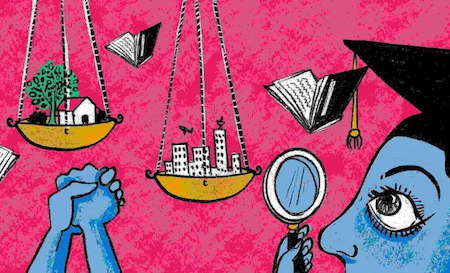
International Day of Women and Girls in Science In order to achieve full and equal access to and participation in science for women and girls, and further achieve gender equality and the empowerment of women and girls, the United Nations General Assembly declared 11 February as the International Day of Women and Girls in Science in 2015. | Learn more >>
Women scientists on the forefront of climate action – United Nations >> “Over the last few decades, the world’s understanding of climate change has improved exponentially thanks to science, technology and the dedication of some of the world’s top climate scientists. We pay tribute to the women who champion the science behind climate change.”
India celebrates Sarojini Naidu’s birthday as National Women’s Day every year on February 13. She was born on February 13, 1879. She was famous for her nickname ‘Nightingale of India’ or ‘Bharat Kokila’ because of her poems. She has written several poems on themes like romance, patriotism, and tragedy.
Sarojini Naidu is famous all over the world for her literary contribution. To honor the contributions of Sarojini Naidu, February 13 is observed as National Women’s Day of India.
Sarojini Naidu was not only a freedom fighter, but she also became the first woman governor of the United Provinces, the present Uttar Pradesh. She was elected as the President of the Indian National Congress in 1925 because of her political and educational abilities. In 1942, Gandhiji started Quit India Movement and British Government kept Sarojini Naidu in imprisonment for 21 months.
National Women’s Day is observed to celebrate the social, cultural, political, and economic achievements of women. […]
“Tribal communities are a standing example of how women play a major role in preservation of eco historic cultural heritage in India.” – Mari Marcel Thekaekara (writer and Co-Founder of ACCORD-Nilgiris) | Learn more >>
Find scholarly books, poetry and fiction relating to tribal culture – Indian publishers
List of sites covered by this Google SafeSearch engine
Combine the name of any particular state, language or region with that of any tribal (Adivasi) community.
Add keywords of special interest (music, poetry, dance just as health, sacred grove and biodiversity); learn about the rights of Scheduled Tribes such as the “Forest Rights Act” (FRA); and the United Nations “Declaration on the Rights of Indigenous Peoples”, “Universal Declaration of Human Rights”, “women’s rights”, or “children’s right to education”.
Ask a question that includes “tribal” or “Adivasi”, for instance: “Adivasi way of life better?” (or “tribal way of life worse?”)
Specify any particular issue or news item (biodiversity, bonded labour and human trafficking, climate change, ecology, economic development, ethnobotany, ethnomedicine, global warming, hunter-gatherers in a particular region or state, prevention of rural poverty, water access).
For official figures include “scheduled tribe ST” along with a union state or region: e.g. “Chhattisgarh ST community”, “Himalayan tribe”, “Scheduled tribe Tamil Nadu census”, “ST Kerala census”, “Particularly Vulnerable Tribal Group Jharkhand”, “PVTG Rajasthan”, “Adivasi ST Kerala”, “Adibasi ST West Bengal” etc.
SafeSearch browser tips
If your (mobile) browser fails to display “embedded” media contents, Google maps and SafeSearch windows
Try another browser like Firefox, Chrome or Safari available on your device
Ensure your favourite browser is up to date
Close your present browser
Check your browser and mobile (gsm) settings: e.g. permission for video or JavaScript (seen under Preferences >Security >Enable JavaSript)
Restart your computer (smartphone, tablet)
Reconnect to your wifi network or connect to a different one
On some iPhone models the following helps:
>Settings >Safari >scroll down to: SETTING FOR WEBSITES
Return to >Settings and disable “Request Desktop Website” again
Return to the post in Safari and “Reload”which should now display “embedded” contents as intended (with the convenience of browsing the mobile version on a small screen)
Note: similar solutions may also work with other mobile operating systems.
“If women are empowered, there is more development in society” – Droupadi Murmu | More speeches by the President of India >>
It’s Valentine’s Day. Definitely not a traditional Indian holiday | Read the full article by Mari Marcel Thekaekara here >>
A more interesting celebration, a new one, is that women’s groups have made this day an international celebration of women from every corner (it seems) of the world. Last year [2013], I wrote on 14 February about the One Billion Rising campaign. I was in Gujarat, celebrating the day, dancing and singing with a few thousand women and their supportive men. There was music, folk dancing, everyone swaying to the beat. The atmosphere was electric. The entire group was vibrant, joyous and upbeat. It made you forget, for that brief shining moment at least, the hardship, injustice, cruelty and domestic violence that our women – and women everywhere – deal with for the larger part of their lives. […]
The excitement is palpable. News has poured in from all over Africa, the US, Britain, every corner of India, Pakistan, Asia, and even Afghanistan. […]
About the author Mari is a writer based in Gudalur, in the Nilgiri hills of Tamil Nadu. She writes on human rights issues with a focus on dalits, adivasis, women, children, the environment, and poverty. Mari’s book Endless Filth, published in 1999, on balmikis, is to be followed by a second book on campaigns within India to abolish manual scavenging work. She co-founded Accord in 1985 to work with Adivasi people. Mari has been a contributor to New Internationalist since 1991.
About the blog I travel around India a lot, covering dalit and adivasi issues. I often find myself really moved by stories that never make it to the mainstream media. My son Tarsh suggested I start blogging. And the New Internationalist collective are the nicest bunch of editors I’ve worked with. So here goes.
Search Worldcat.org for publications by reputed authors (select “Open Content/Open Access” for freely downloadable content)Search tips
Combine the name of any particular state, language or region with that of any tribal (Adivasi) community.
Ask a question that includes “tribal” or “Adivasi”, for instance: “Adivasi way of life better?” (or “tribal way of life worse?”)
Add keywords of special interest (music, poetry, dance just as health, sacred grove and biodiversity); learn about the rights of Scheduled Tribes such as the “Forest Rights Act” (FRA); and the United Nations “Declaration on the Rights of Indigenous Peoples”, “Universal Declaration of Human Rights”, “women’s rights”, or “children’s right to education”.
Specify any particular issue or news item (biodiversity, bonded labour and human trafficking, climate change, ecology, economic development, ethnobotany, ethnomedicine, global warming, hunter-gatherers in a particular region or state, prevention of rural poverty, water access).